Buying Guide
Asphalt vs. Pavers for Your Driveway: Which Is Right in MA?
Choosing a driveway surface in Massachusetts is not just about looks. Between freeze-thaw cycles, heavy snow, plow blades, and road salt, our climate is tough on any material. Asphalt and pavers are the two most common choices, and each has real strengths. This guide walks through cost, durability, winter performance, maintenance, and resale so you can decide what makes sense for your Central MA or MetroWest home.
Upfront Cost: Asphalt Is Easier on the Budget
The biggest difference most homeowners notice right away is price. As a general rule across the industry, asphalt costs significantly less to install than pavers. Pavers are a labor-intensive product: each unit is set by hand over a prepared base, and that hand-laid work adds up quickly on a full driveway.
Asphalt, by contrast, is poured and compacted as one continuous surface, so a standard residential driveway comes together faster and for a fraction of the paver price. If you want a durable, finished driveway without a premium budget, asphalt is usually the clear winner on cost alone.
Durability and Lifespan
Both surfaces can last a long time when they are installed correctly. Pavers, made from concrete or clay, resist cracking because the joints between units flex slightly with ground movement. That flexibility is a genuine advantage, but it comes with its own maintenance demands, which we cover below.
Asphalt is a flexible pavement too, and one of its best qualities is how simple it is to renew. Instead of replacing the whole surface, asphalt can be resurfaced with a fresh overlay or resealed at a much lower cost than tearing out and resetting pavers. That means an asphalt driveway can keep looking sharp for decades without a major reinvestment.
Winter and Snow Removal
This is where the Massachusetts climate really tips the scales. Asphalt is dark, so it absorbs sunlight and helps snow and ice melt faster than a lighter paver surface. A smooth, continuous asphalt driveway is also friendlier to snow removal: a plow blade or shovel glides across it without catching on anything.
Pavers can be a different story in a snowy climate. Over years of freeze-thaw cycles, individual units can heave or settle, leaving uneven edges that a plow blade can catch and chip. Aggressive de-icing can also work at the sand in the joints. For a driveway that gets plowed all winter, asphalt is the lower-hassle surface.
Maintenance: Sealcoating vs. Re-Sanding Joints
Every driveway needs care, but the type of care is very different. Asphalt is maintained mainly by sealcoating every few years. Sealcoating is a straightforward service that protects the surface from water, sun, and salt and keeps that deep black finish looking new.
Pavers ask for a more hands-on routine. The sand in the joints washes out or breaks down over time and needs to be topped off, and weeds and moss can take root in those same joints if they are not managed. It is not difficult work, but it is ongoing, and it is one more thing on the seasonal to-do list.
Repairs When Something Goes Wrong
No surface is immune to wear, so it helps to know how each one is fixed. Asphalt patches and reseals easily. A cracked or worn area can be repaired and blended, and a full reseal restores the whole driveway at modest cost.
With pavers, you can lift and swap an individual damaged unit, which sounds convenient, and sometimes it is. The catch in a freeze-thaw climate like ours is that settling and heaving tend to show up across the driveway over time, not just in one spot, so repairs can turn into resetting a larger section to get everything level again.
Curb Appeal and Resale
Here is where we will be honest about the trade-off. Pavers look high-end. The pattern, color options, and detailing can give a home a custom, upscale entrance, and for some properties that finish is worth the higher price.
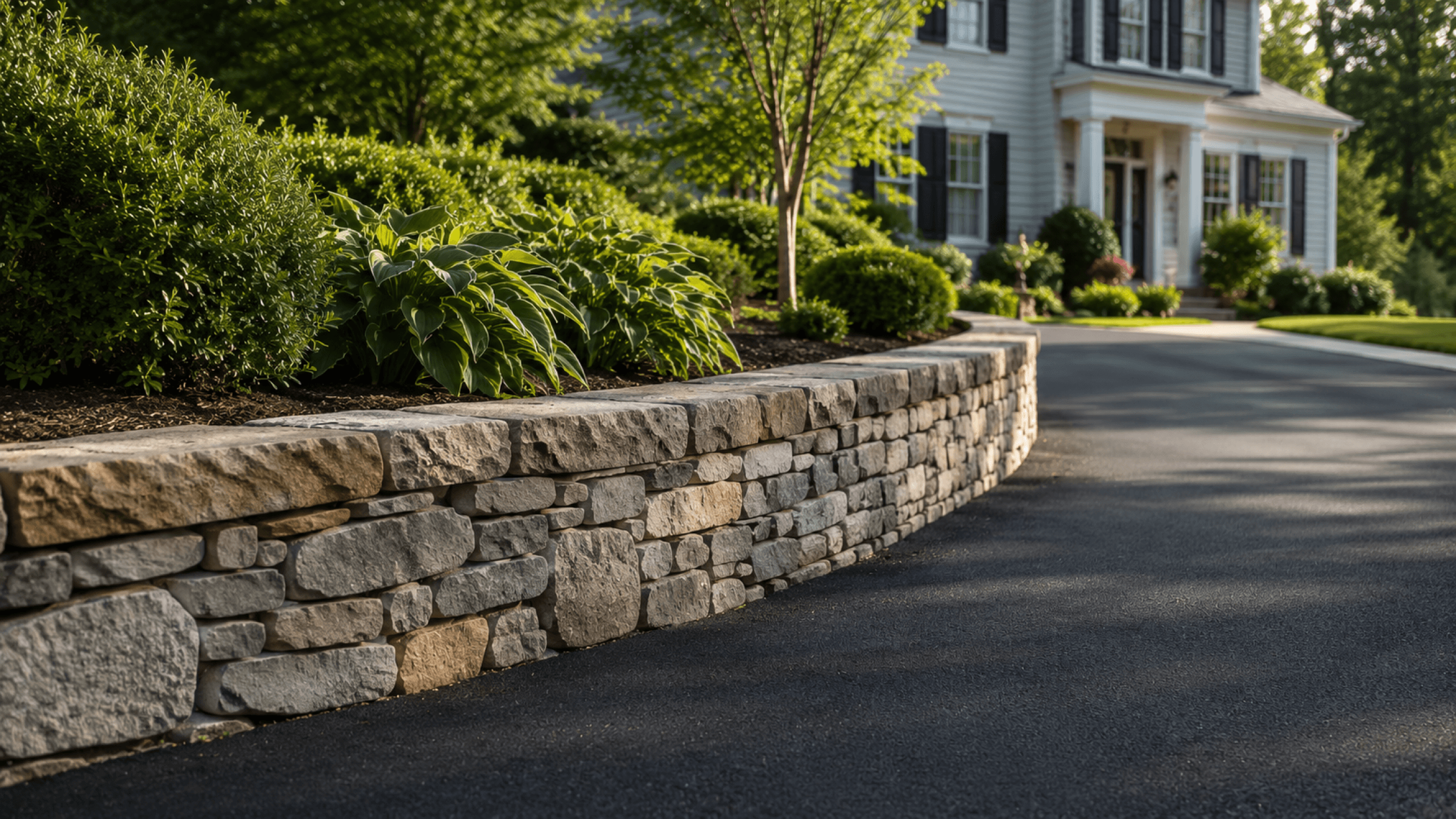
Asphalt takes a different approach: clean, classic, and understated. A freshly sealed black driveway with crisp edges reads as well-kept and complements almost any home style. For most Central MA and MetroWest homeowners, that clean look plus the lower cost and easier upkeep is the better overall value, even if pavers win on pure visual drama.
The Verdict for the Massachusetts Climate
When you weigh our freeze-thaw winters, heavy snow, plowing, and road salt together, asphalt comes out ahead for most driveways. It costs less to install, sheds snow better, is far simpler to maintain and repair, and renews inexpensively with a reseal or overlay.
One thing matters no matter which surface you choose: the base and the installation. A driveway built on a properly prepared, well-compacted base holds up to our winters, and one that is rushed will not. If you want a driveway that stays smooth and looks great season after season, asphalt done right is the practical, lower-cost, lower-maintenance choice for most homes in Worcester County and MetroWest.
Frequently asked
Asphalt is typically much cheaper to install than pavers. Pavers are set by hand over a prepared base, which adds a lot of labor, while asphalt is poured and compacted as one continuous surface, so it comes together faster and at a lower price.
Asphalt generally handles our freeze-thaw winters better. Its dark surface helps snow and ice melt faster, its smooth finish is friendly to plows and shovels, and it renews easily with a reseal. Pavers can heave, settle, and catch a plow blade over time.
As a general guideline, asphalt is sealcoated every few years to protect it from water, sun, and road salt and to keep the surface looking new. The right timing depends on traffic, age, and how the driveway is holding up, which we can assess on site.
Yes, in most cases. Pavers need the sand in their joints topped off as it washes out, and weeds or moss can grow in the joints if left unmanaged. Asphalt maintenance is mainly periodic sealcoating, which tends to be simpler and less frequent.
Pavers offer a high-end, custom look that can boost curb appeal on the right home. Asphalt offers a clean, classic finish at a lower cost with easier upkeep. For most Central MA and MetroWest homes, asphalt is the stronger overall value.
Get a free estimate
Questions about your driveway or lot? Call (774) 442-0835 or request a free, no-obligation estimate.