Sealcoating protects your asphalt from the two things that destroy it fastest in Massachusetts: water and sun. The big question homeowners ask us is simple. How often should you actually do it? For most driveways in Worcester County and MetroWest, the honest answer is every 2 to 3 years. Our tough New England winters can push you toward the shorter end of that range. Here is how to know exactly when yours is due, and why more is not always better.
The general rule: every 2 to 3 years
For a typical residential asphalt driveway, a fresh sealcoat every 2 to 3 years is the accepted standard. Sealcoat is a protective top layer, not the pavement itself. Over time, sun (UV), rain, and traffic wear that layer down until the asphalt underneath is exposed again.
In New England, we lean toward the shorter end of that window. Central Massachusetts driveways take a beating that milder regions never see. Repeated freeze-thaw cycles work water into the surface, expand it as ice, and slowly pry the pavement apart. On top of that, the heavy road salt and sand tracked up your driveway all winter are abrasive and chemically harsh. A driveway that might stretch to 3 years in a gentler climate often does better on a 2 year rhythm here.
How to tell it is time to reseal
You do not need a calendar to know your driveway is asking for attention. The surface tells you. Watch for these signs:
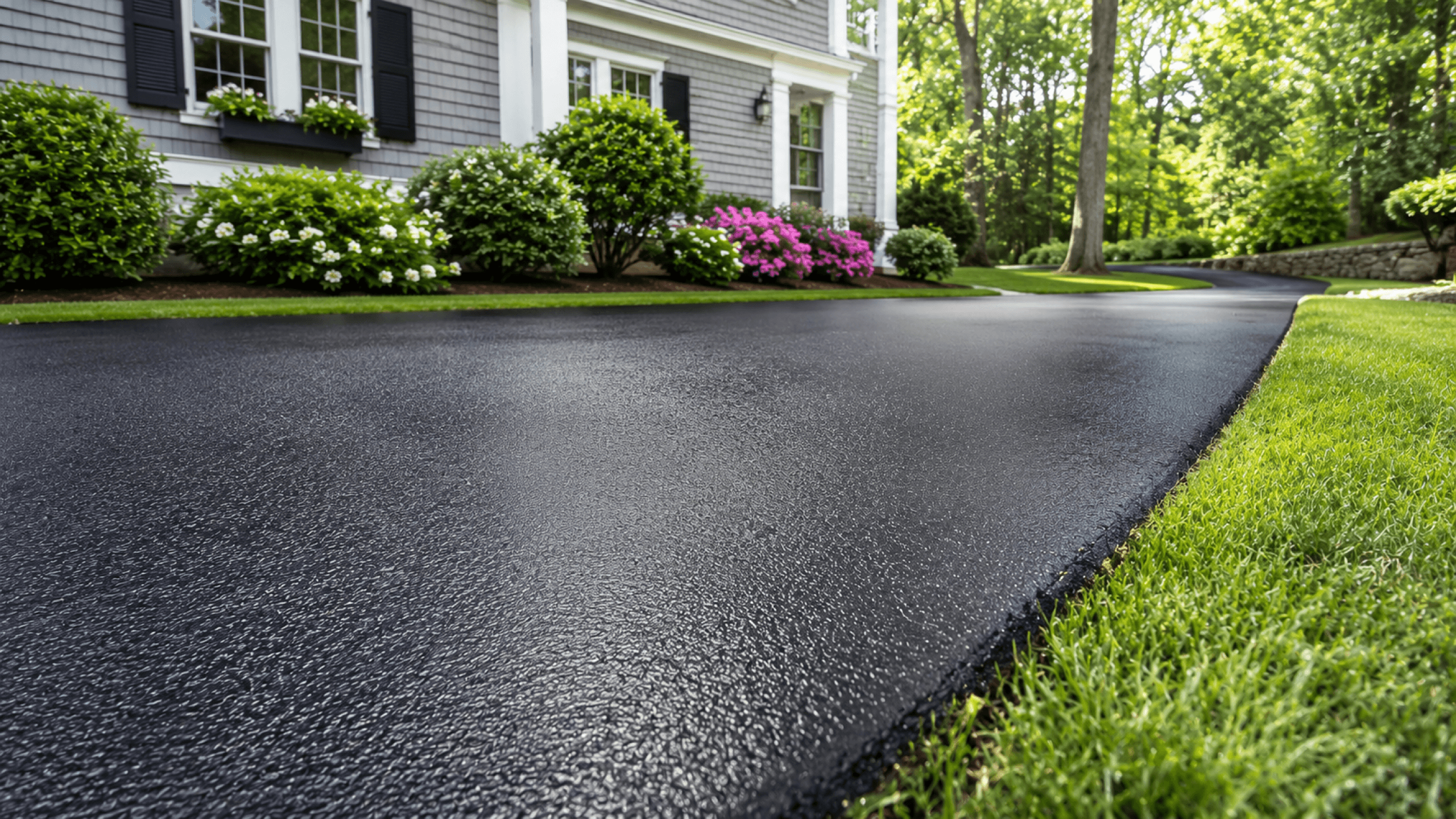
Color: a healthy sealed driveway is deep, rich black. When it fades to a dull, washed-out gray, the protective layer is worn thin and UV is reaching the asphalt.
Water: on a fresh seal, water beads up and rolls off. When rain soaks straight in instead of beading, the surface has gone porous and is no longer shedding moisture.
Texture: run your hand across it. A rough, gritty, or porous feel (you can sometimes see the loose stone aggregate) means the binder is breaking down.
Cracks: small hairline cracks starting to spider across the surface are an early warning. Seal and fill them before Massachusetts winter water gets in and turns them into potholes.
If you are seeing two or more of these, it is time.
Why more is not better: do not over-seal
It is tempting to think that if sealcoating protects the driveway, sealing every single year must protect it even more. It does not, and it can actually cause damage. Sealcoat needs to wear down a bit before the next coat goes on.
When you apply coat after coat too frequently, the sealer builds up thicker than it should. That thick, layered film cannot flex with the pavement through our temperature swings. Instead it becomes brittle, then peels, flakes, and cracks off in sheets, leaving an ugly, uneven surface. Sticking to the 2 to 3 year schedule (rather than doing it annually) gives you better protection and a better looking driveway.
New asphalt: wait before the first sealcoat
If you just had a new driveway paved, do not rush to seal it. Fresh asphalt needs time to cure and release the oils it was laid with. Sealing too early traps those oils and keeps the pavement soft, which can lead to scuffing, tracking, and a coat that will not bond properly.
The common guidance is to wait roughly 6 to 12 months before the first sealcoat, letting the surface harden and lightly oxidize first. In practice, that often means a driveway paved in one year gets its first seal the following season. If you are unsure whether yours is ready, we are happy to take a look and tell you honestly.
Seasonal timing in New England
Sealcoat cures with warmth and dry air, so when you seal matters as much as how often. In Massachusetts, the reliable window runs through the warm, dry months of late spring, summer, and early fall. Daytime temperatures need to stay comfortably warm, and the forecast should be dry for at least 24 hours after application.
Avoid late fall. Once the nights turn cold and morning dew lingers, sealer will not cure correctly. It stays tacky, bonds poorly, and heads straight into the freeze-thaw season unprotected. If your driveway is due but the weather has turned, it is usually better to wait for spring than to seal in conditions that will not let it set.
Maintenance between sealcoats
Sealcoating is one part of caring for a driveway, not the whole job. A few simple habits between coats will stretch the life of your pavement and keep every dollar of sealcoat working harder.
Fill cracks early: crack filling between sealcoats is the single most important thing you can do in New England. Sealing a crack keeps water out, and water that freezes inside a crack is what turns a hairline into a pothole.
Keep it clean: sweep off leaves, dirt, and winter sand. Standing debris holds moisture against the surface and speeds up wear.
Address oil spots: gasoline, motor oil, and other petroleum leaks dissolve asphalt and stop sealer from bonding. Clean spills promptly and treat stained areas before the next seal.
Frequently asked
For most residential driveways in Worcester County and MetroWest, every 2 to 3 years is the right schedule. Because our winters bring heavy freeze-thaw cycles and road salt, many local driveways do best closer to the 2 year mark. The surface itself is the best guide: if the black has faded to gray and water no longer beads, it is time.
Yes. Sealing every year is a common mistake. When coats go on before the previous one has worn down, the sealer builds up too thick, becomes brittle, and peels or cracks off. Sticking to the 2 to 3 year window gives you better, longer lasting protection than over-sealing.
Wait for the new asphalt to cure first, commonly 6 to 12 months. Fresh pavement still holds the oils it was laid with, and sealing too early traps them and keeps the surface soft. Letting it cure and lightly oxidize means the first sealcoat bonds properly and lasts.
The warm, dry months from late spring through early fall. Sealcoat needs warmth and dry air to cure, so you want mild temperatures and a dry forecast for at least a day after application. Avoid late fall, when cold nights and morning dew keep sealer from setting before winter arrives.
Look for a faded gray color, water soaking in instead of beading up, a rough or porous feel underfoot, and small cracks starting to appear. Any two of these together mean the protective layer is worn and it is time to reseal, ideally before the next Massachusetts winter.
Get a free estimate
Questions about your driveway or lot? Call (774) 442-0835 or request a free, no-obligation estimate.